How Lodhi Garden became a print
The garden that gave one of our prints its name.
Lodhi Garden, in New Delhi, brings several kinds of time together: fifteenth- and sixteenth-century tombs, old trees, walking paths and the daily life of a city park.
The domed tombs built for rulers of the Sayyid and Lodi dynasties still stand among the greenery. Their stone surfaces have weathered, but the architecture remains quietly imposing. Around them, the garden continues to change with the seasons.
There are flowers in formal beds, branches crossing overhead and small striped squirrels moving at surprising speed between the grass and the walls. Parakeets fly past in flashes of green. Other birds are easier to hear than to see. The eye keeps moving from a large architectural shape to the flicker of wings among the branches.
We have spent many mornings walking here, noticing how the same paths look different depending on the light or the time of year. It is one of the places we like to return to when we are in Delhi.
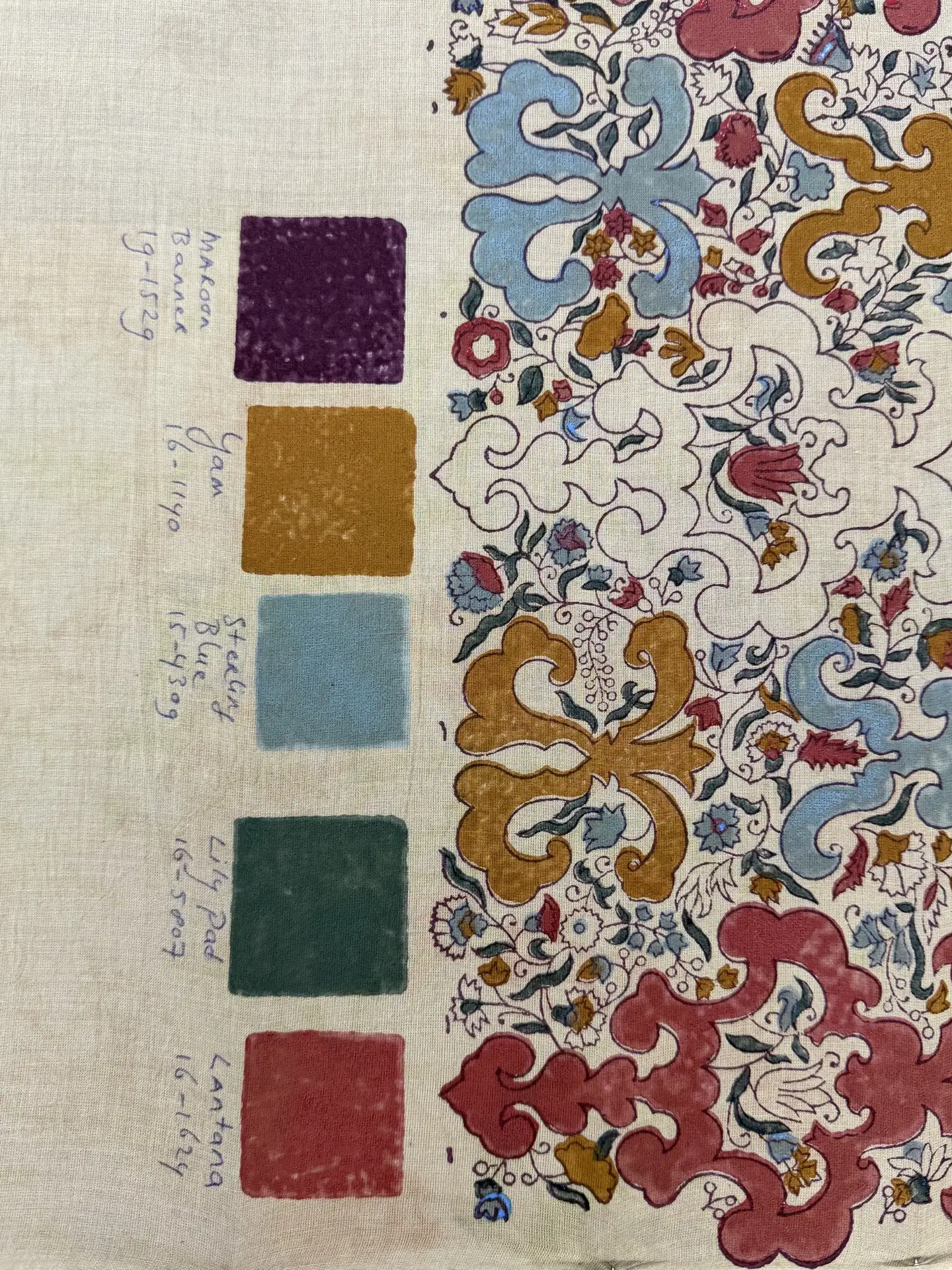
The starting point for the Lodhi Garden print was an existing Mughal-period design, with birds, branches and flowers that felt at home among the old trees and tombs we had come to know. We adapted the historical print for our Cotton Cashmere collection and named it after the garden that gave those motifs a particular resonance for us. Seen through the top layer of cotton voile, the pattern has the veiled quality that distinguishes the fabric.