Craftsmanship
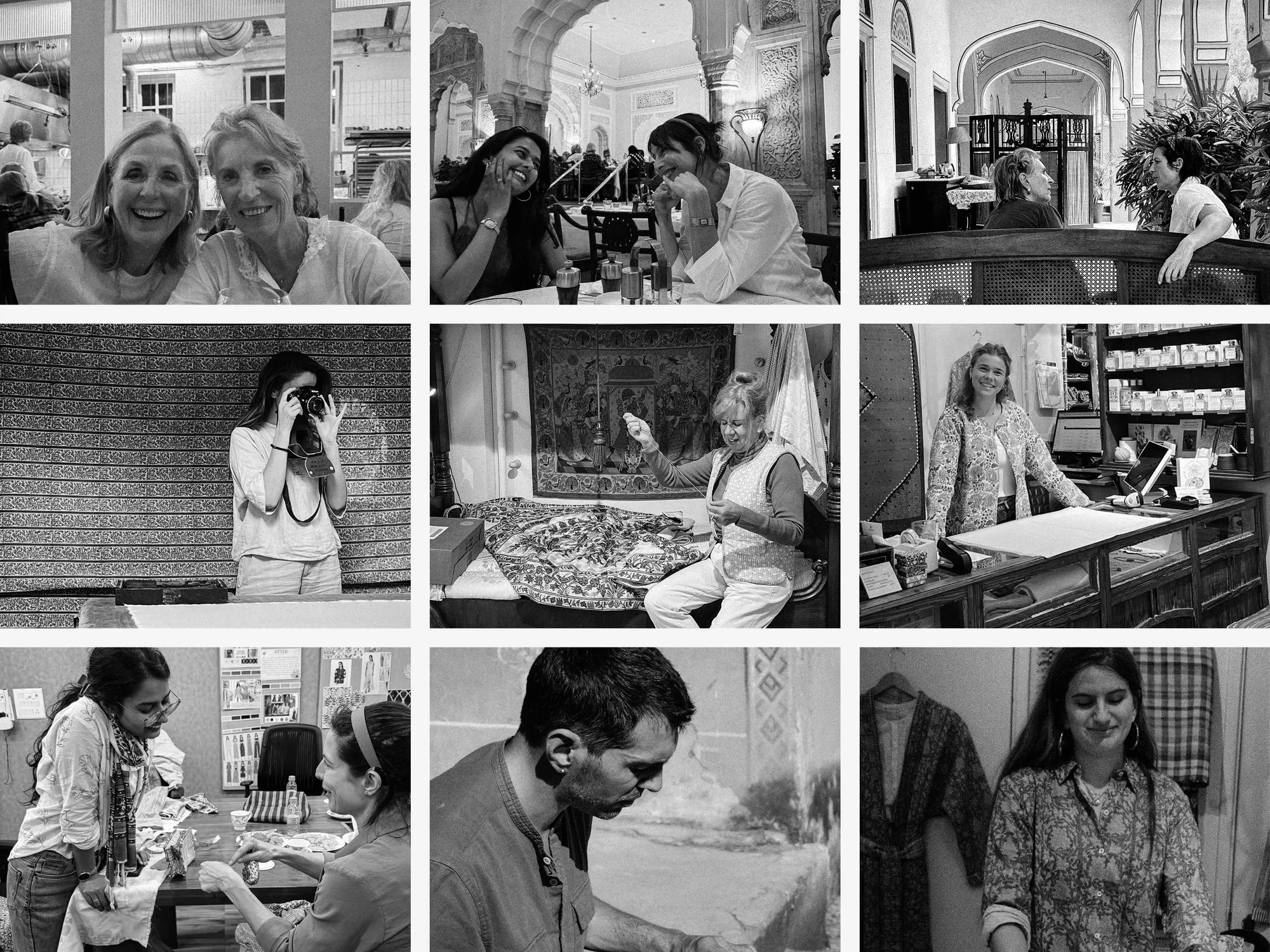
In the workshops, the cloth makes a long journey: past the block carver, who works the wood along its grain and then tests whether the block gives a clean impression; past the colour mixer adjusting a shade; and past the printer finding the rhythm of the repeat. Then the tailor cuts the layers of cloth and brings them together. Each stage calls for a different kind of knowledge. What begins as a design in Amsterdam comes to life with the people we work with in India.
Block printing
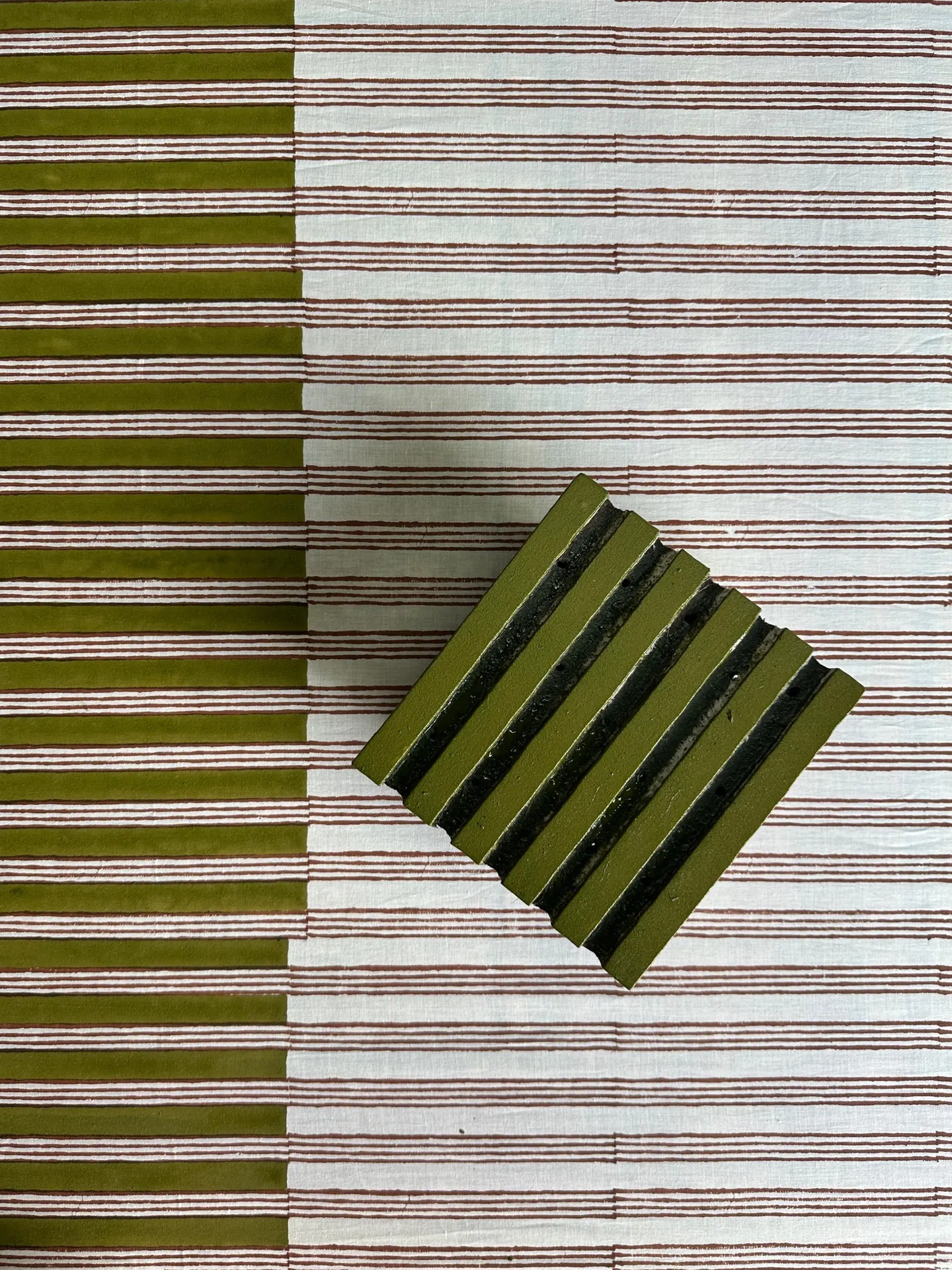
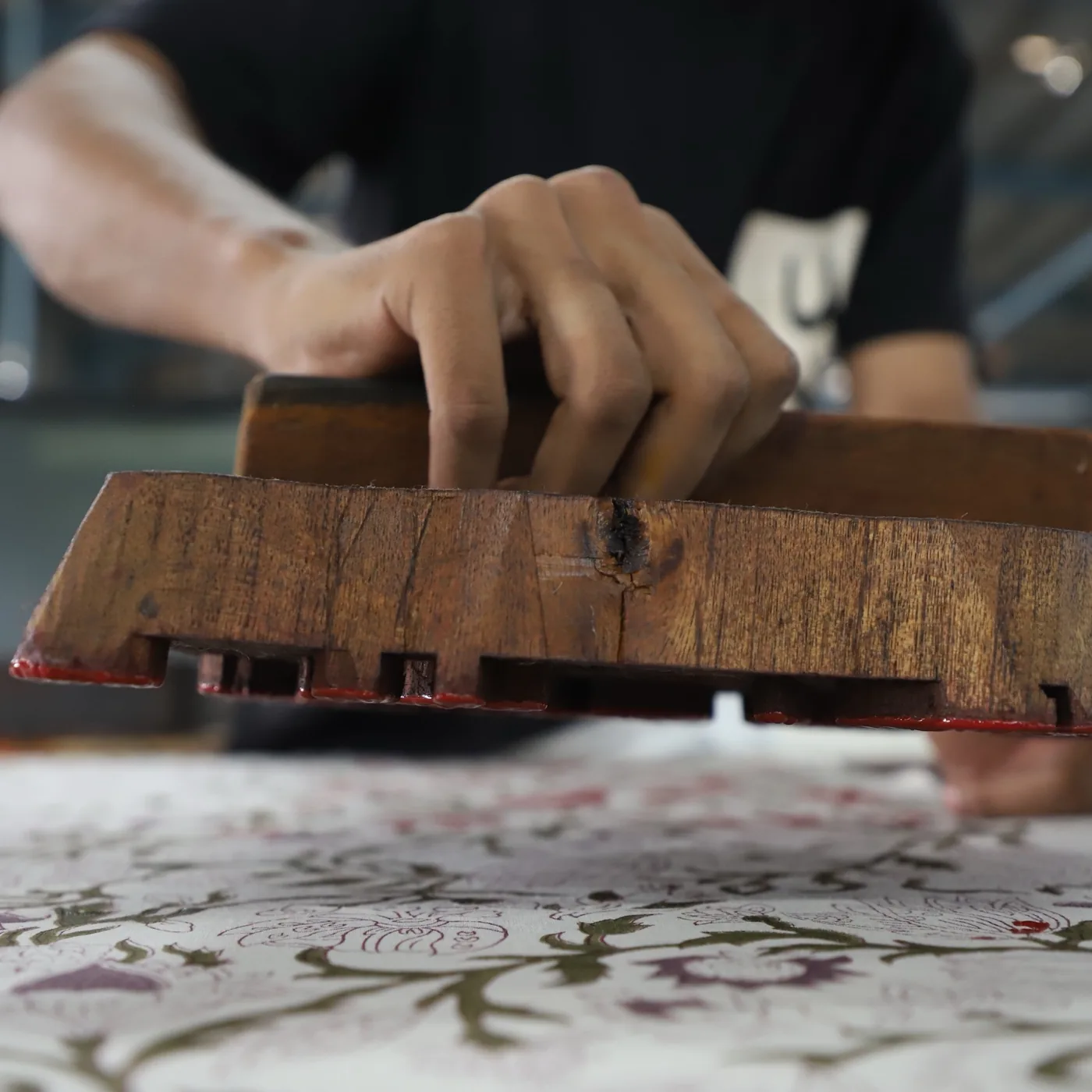
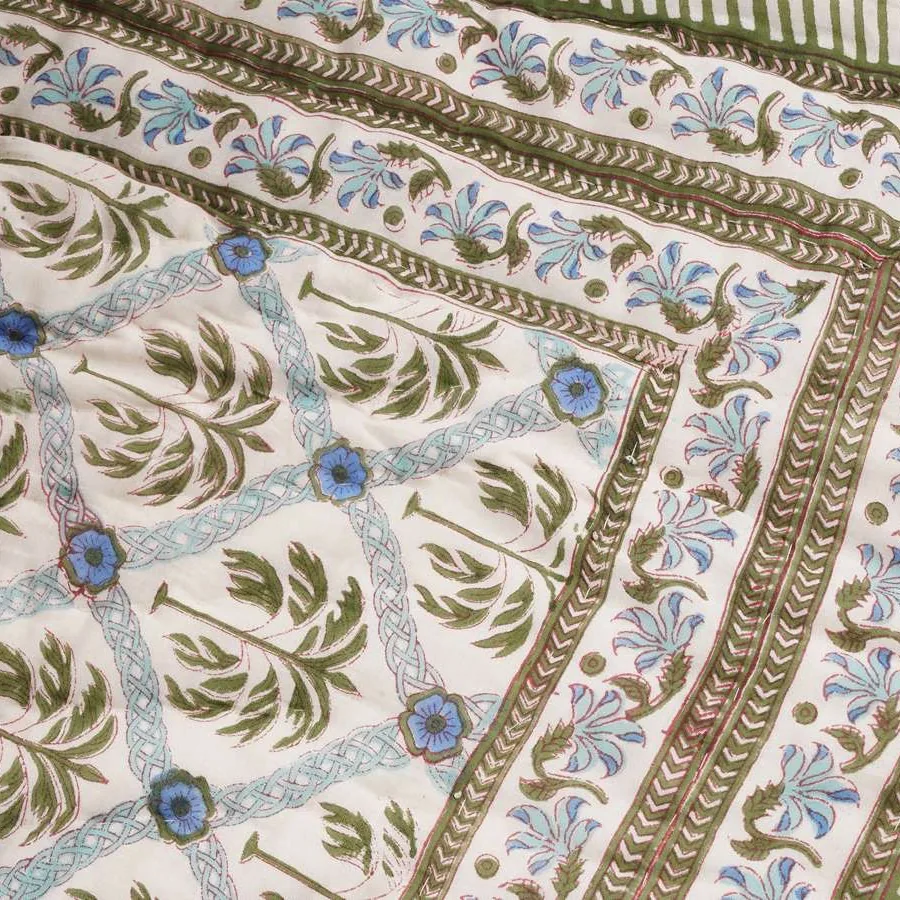
For a block print, the design is first carved in relief into a piece of wood. Each colour requires its own block, and every impression has to match its neighbouring impressions. Once the first colour has been applied along the table, which can be up to 18 metres long, the process is repeated for the second colour, then the third, and so on. The printers work across the fabric in their own rhythm, continually judging the placement and quality of each impression. A block print can be remarkably precise, but its surface never has the flat uniformity of an industrial print. A slightly deviating edge or a shift in pigment is what gives the print depth and invites a closer look. It is what brings a print to life and gives it warmth.
Screen printing
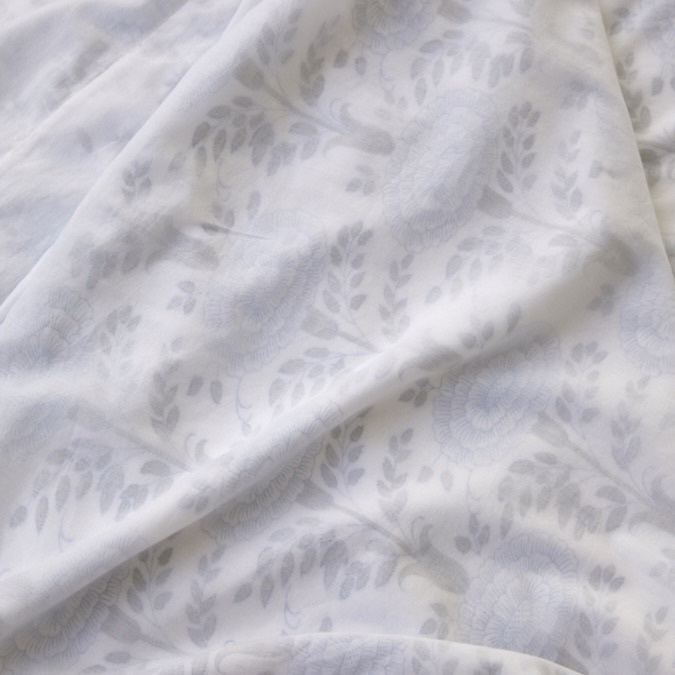
Screen printing works differently. Ink is drawn across a fine mesh screen, passing through the areas left open by the design. A separate screen for each colour builds up the design one colour at a time. We use this technique for Cotton Cashmere, printing on the middle of three layers of fine cotton voile. Seen through the outer layer, the colours become muted and take on something mysterious, as if they were held within the fabric itself. The effect is deliberate: there is something magical in the way the print subtly emerges as the cloth moves.
Quilting
Quilting gives cloth a different weight and an insulating warmth. A soft, airy cotton filling is placed between the cotton top and bottom layers. The layers are held together with rows of stitching, sometimes dense and regular, sometimes more freely spaced, or even stitched in patterns of their own. In hand-quilted pieces the stitches remain visible and lend the surface texture. Our quilts are made from block-printed cotton, and the lines of stitching across the print give the fabric a second, visible layer of handwork.
One-of-a-kind textiles
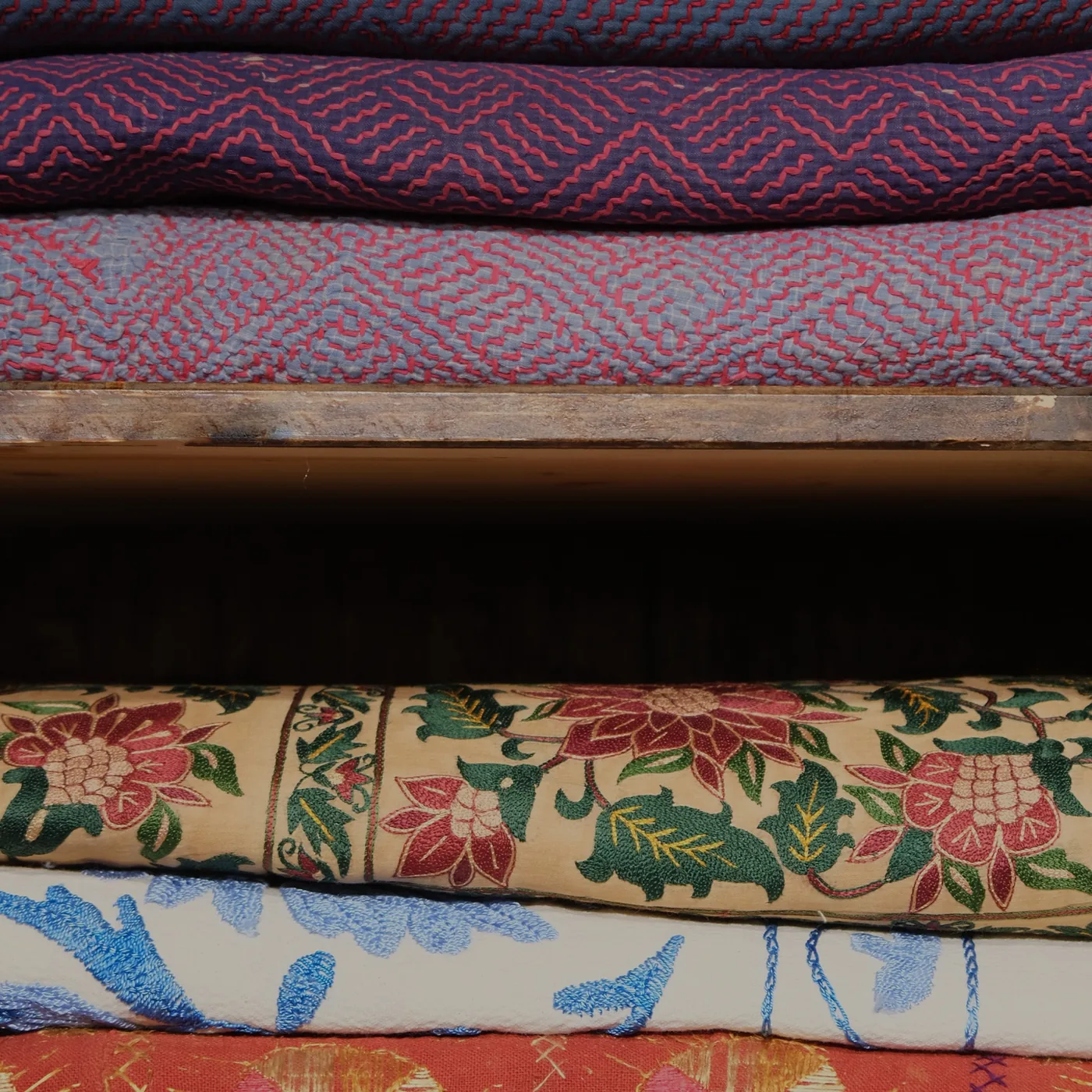
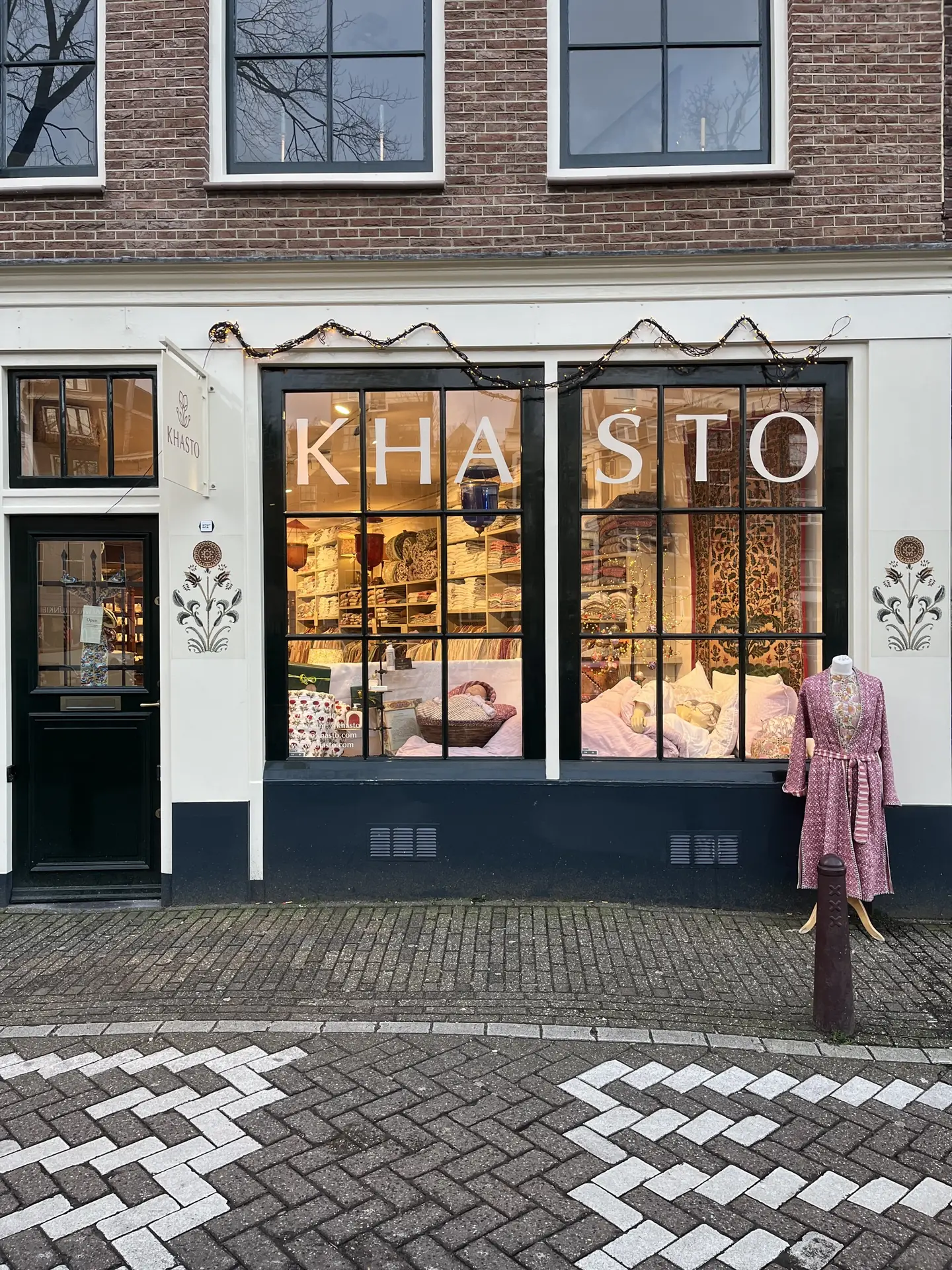
An old cabinet in our Amsterdam shop holds pieces that do not belong to any seasonal collection. Among them are kantha quilts, Uzbek Suzanis, indigo cloth, Ajrakh prints, Kalamkari, embroidered wall hangings and other textiles gathered over the years. Each has its own language of pattern and technique; some were made for everyday use, others for ceremonies such as weddings, or for religious and spiritual reasons. Each one invites a closer look, and an understanding of the story behind it. One such story belongs to the large printed cloths known as Mata ni Pachedi, one of which is in our collection. Some three to four hundred years ago, a nomadic community, also known as the Chitara community, was barred from the regular Hindu temples because of its low caste status. To worship their goddess all the same, they made their own sacred space from cotton cloths: quite literally, a mobile temple. The cloths were hung as temporary shrines at religious gatherings, or on the walls of their homes. The contents of the cabinet are always changing: pieces find a new home, sometimes after many years, and others take their place. Most cannot be found online, only in our shop.