The Cotton Cashmere
Intertwined traditions
Known as 'Cotton Cashmere', our soft cotton collection of bed linen and nightwear is born from a history of intertwined traditions.
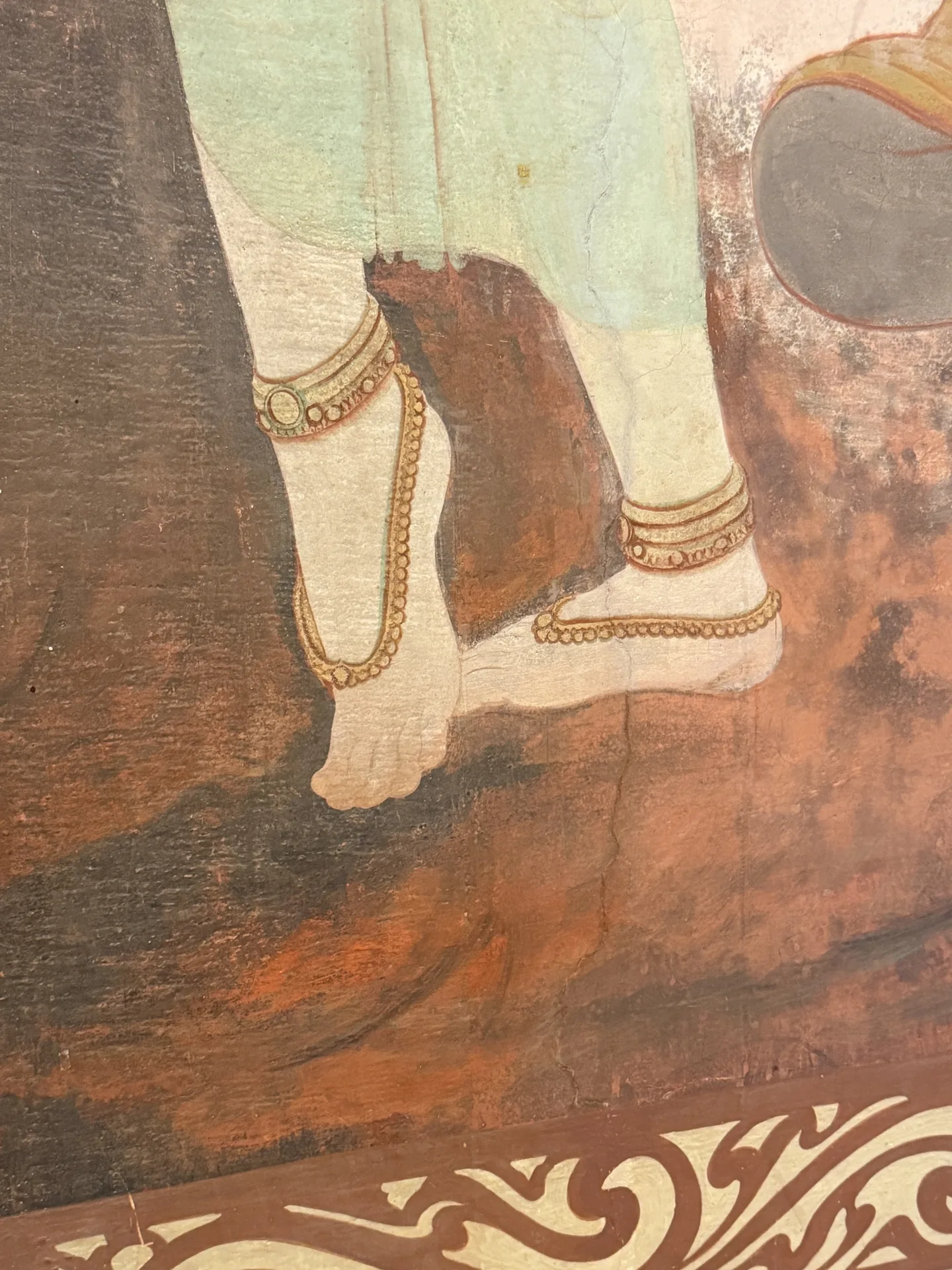
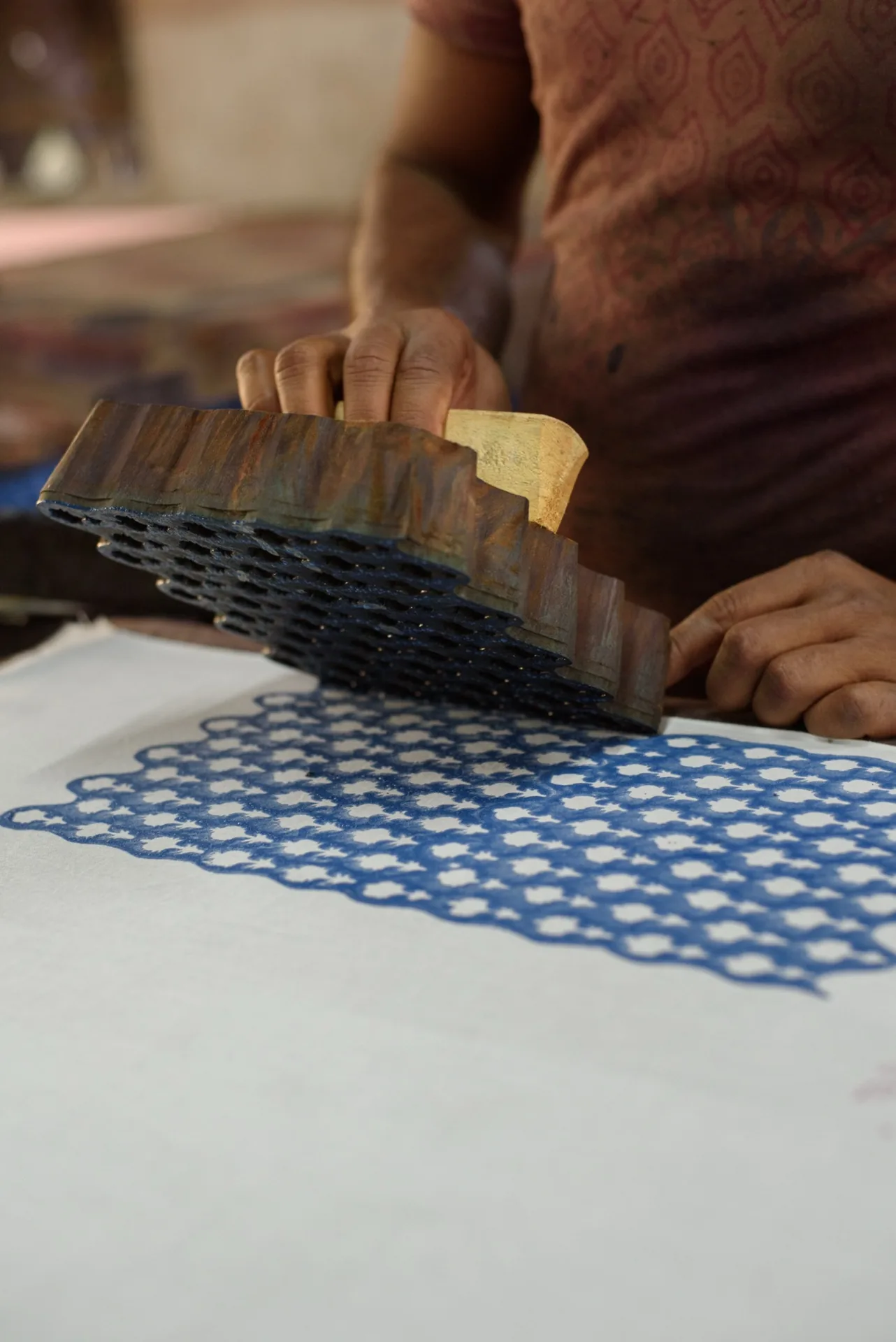
In the eighteenth century, the Nepalese princess Damber Kumari lived temporarily in Benares, a holy city in India with a rich history in fabrics. During her stay she became acquainted with the Indian art of block printing on cotton. When she returned to her native Nepal, she further developed this technique. Because of the colder Nepalese climate, she sewed a layer of fine cotton (voile) on each side of the printed fabric. The three layers proved to regulate heat and to make the garment breathable, soft to the touch and pleasing to the eye: the two outer layers were so thin that the middle layer remained visible. This type of fabric was mainly used as a shawl and is also known as Damber Kumari Khasto. 'Khasto' means 'scarf' in Nepali; there is also, for example, the Pashmina Khasto and the Dhaka Khasto. In India, the three-layer scarf is known as 'dohar'.
In the late 1990s, an Indian friend of Gon Uppal, the mother of current owner Rahul, gave her a Nepalese Damber Kumari Khasto as a gift. Gon, a lover of fabrics, was inspired. With her own Mughal-inspired prints and a fine voile, she designed a new collection of nightwear, children's and baby clothes, accessories, bedding and meditation wear. Gradually, we and our customers have come to call the three-layer material 'Cotton Cashmere', because the cotton has a softness reminiscent of cashmere.
In addition to the collection made of this fabric, we have an annually changing block print collection, which is printed entirely by hand.