Embroideries of Gujarat
A tribute to ingenuity
Every journey to India brings something new: a style, a technique, a gesture we had not known before. That sense of discovery is one of our greatest sources of inspiration, and we look forward to it every time.
Many textile maps of India can be found online, showing which specialisms are found in which areas. In this piece we take a brief look at Gujarat, a state in India. Marco Polo noted in the thirteenth century that the level of craftsmanship in Gujarat was particularly high: a telling observation from someone who had travelled through all the regions along the Silk Road.
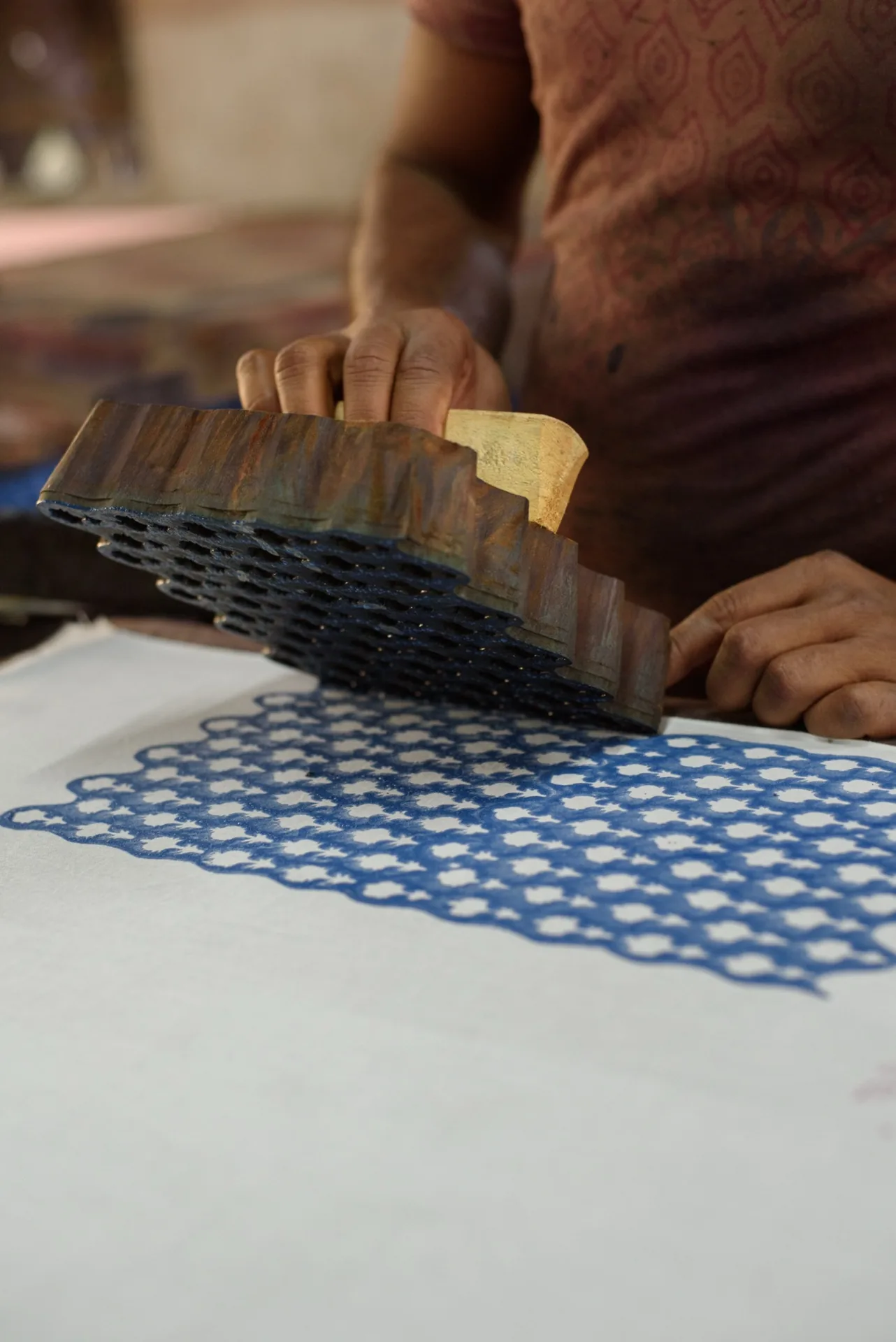
Located in north-western India, Gujarat has many different styles of embroidery, each telling a cultural and historical story. Travelling through the region, you notice that in every area, almost every village, a technique with its own unique character has been mastered: a particular embroidery stitch, or a unique way of painting fabrics. Each is born of ingenuity, creativity and the materials and raw materials at hand.
The photo at the top of this page shows a so-called Toran, a cloth hung above a doorway, made by the Mahajan community. They use the Khatipa stitch: long strokes of silk thread on cotton cloth, often in geometric patterns and purplish colours, frequently with small mirrors worked in.
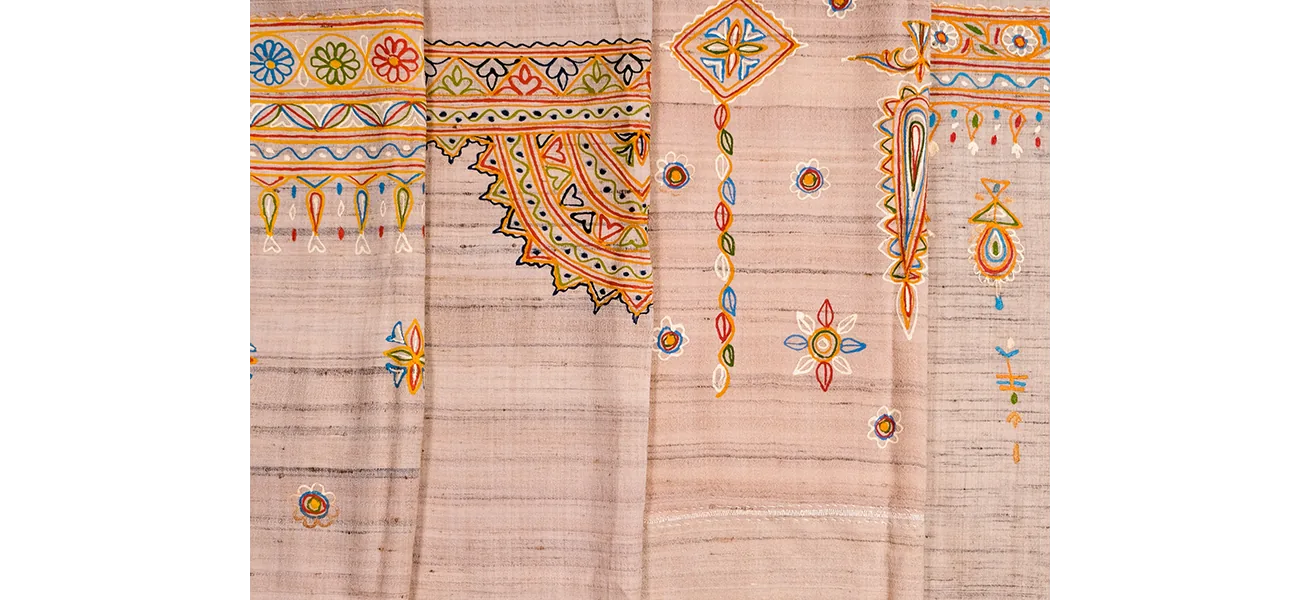
The wall hanging you see on this page was made by the Mochi community, traditionally specialists in leatherwork, who applied the stitch they developed for leather (the so-called Aari stitch) to textiles. It is a tight, short chain stitch with which they create compositions that appear soft and warm, like a living painting.